Sign up for the Slatest to get the most insightful analysis, criticism, and advice out there, delivered to your inbox daily.
The Cheltenham Youth Detention Center in Maryland has been in operation in some form for more than 155 years. Just adjacent to the facility, still in operation today, is a haunting reminder of the past: the graves of more than 200 children who died in state custody. Tragically, these children still do not have a proper memorial for the crimes they suffered that led them to their current home. We hope to change that.
We come to this story from opposite sides of the detention walls: One of us oversaw the incarceration of youth at the Cheltenham Youth Detention Center, and the other was incarcerated there as a child in the 1990s. But we are driven by a common belief—knowing that our history, even if painful, is necessary to make the system fairer and more effective. Guided by that principle, one of us helped launch an effort within Maryland’s Department of Juvenile Services to examine its history, including its segregationist past. What that research uncovered was not simply troubling, but a moral failure buried for over 100 years and one we still need to see addressed.
In 1855 Maryland opened the House of Refuge, becoming the first Southern state to establish a facility to remove children from adult jails and prisons. However, while white youth were transferred out of adult facilities, Black children as young as 5 remained incarcerated alongside adults. It was not until 1870, after slavery was abolished, that Maryland would create a separate facility for Black youth. Most of the children at the newly instituted House of Reformation and Instruction for Colored Children—located on the grounds where the Cheltenham Youth Detention Center now sits—were held for minor offenses, including running away from home and being “incorrigible.”
Where the House of Refuge emphasized education and rehabilitation, the House of Reformation emphasized labor and control. The message was clear: White children needed “refuge,” whereas Black children required “reformation.” These institutions remained segregated until 1961, when Maryland was compelled to desegregate only after being sued by Juanita Jackson Mitchell and Thurgood Marshall. Equal treatment was not freely given by the state, which fought the lawsuit; it was ordered by the courts. While desegregation eventually occurred, the racial inequities baked into those early systems continue to shape who is incarcerated, disciplined, and denied opportunity today.
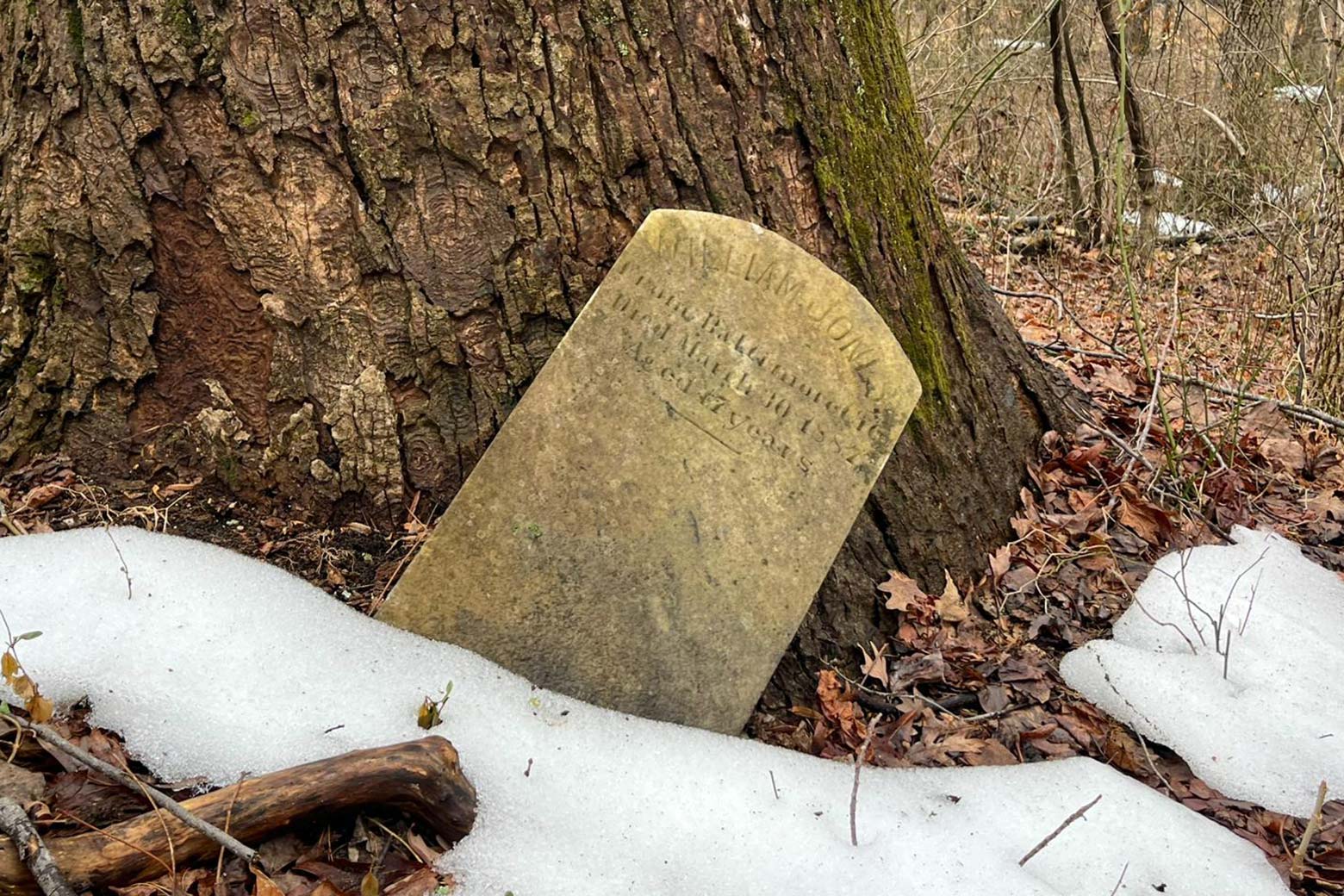
While we were researching this history, a former staff member at Cheltenham who had worked at the facility for more than 40 years told us about a burial ground on the property. After searching for records and walking the land, we found it: a long-abandoned, heavily wooded site. Beneath moss-covered cinder blocks, dilapidated stone markers, and a handful of headstones, more than 200 children who died in state custody between the 1870s and 1930s are buried. Standing there, it was impossible for the two of us not to imagine Tyrone as a boy once confined at the same facility and how easily he could have been one of those now buried, with only a bare cinder block to mark the site.
Official records list disease as the cause of death for most of the boys who perished. But reporting at the time and witness testimony tell a more disturbing story—one of violence, neglect, and systemic indifference. Families were rarely if ever notified when their sons died. Compounding this painful apathy is the fact that state officials were made aware of the burial ground by at least the 1970s. Yet nothing was done to preserve or mark it. Hundreds of Black children remained in unmarked graves for decades, their deaths ignored publicly.
Only recently has that begun to change. Under Gov. Wes Moore’s administration, Maryland’s Department of Juvenile Services made plans to restore and formally recognize the burial ground, determine how many boys are buried there through the use of ground-penetrating radar, identify the children, and attempt to contact surviving family members. The Legislative Black Caucus of Maryland has introduced a bill to investigate the causes of these deaths and recommend how the state can finally acknowledge and address the harms committed against these children and their families. Recognition alone is not enough; the state must also take responsibility for the harm it caused and ensure transparency, accountability, and reparative action.
Sadly, but not surprisingly, Maryland is not alone. Similar abandoned burial grounds for incarcerated children exist in states across the country. Together, these sites tell a story about how vulnerable children—disproportionately Black, poor, and powerless—were treated as expendable, buried, and forgotten. These sites are not graveyards, built for sacred rest. They are more like abandoned crime scenes.
This realization led us to launch a national initiative at Georgetown University’s Center for Youth Justice to find, research, and recognize these burial grounds, and to honor the children buried there. In Maryland, we have conducted genealogical research that has already identified living relatives of boys buried after having died or been killed at the House of Reformation. These families deserve to know about their long-lost relatives and to participate in decisions to recognize this injustice and repair the harm.
In the face of efforts to erase or sanitize the uncomfortable history of our country, confronting this past is more important than ever. Despite lying beneath unmarked stones, these young people were not nameless. They were children with families; they lived, they hoped, and they deserved care. We should say their names, tell their stories, and honor their legacies by atoning for the harms caused and ensuring that nothing like this ever happens again.